Photography permits in France
When a French photo session needs authorisation and when it does not: public streets, parks, monuments, national estates, drones and the right to your own image.
Almost every article on this subject makes the same mistake: it states a single rule. There is no single rule. France applies different regimes to the public street, to a municipal park, to a national estate and to the inside of a monument, and the answer changes again depending on whether the shoot is professional and whether you set down a tripod.
What follows is the shape of it, so you know which question to ask about your own session. We check the specific case before every booking rather than relying on a general rule that will be wrong somewhere.
The public street
Taking photographs from the public highway is free, including of buildings, and including professionally. There is no permit and no fee.
Two things narrow that.
People. Anyone recognisable in a photograph holds a right to their own image, which is separate from anything to do with the location. In a session that is not a problem — you are the subject and you have agreed — but it does mean a passer-by who is identifiable and is clearly the subject of a frame cannot be published without their agreement.
Obstruction. A session that blocks a pavement, uses lighting stands, or brings a crew rather than a photographer stops being a private activity and becomes an occupation of public space, which the *mairie* charges for. In practice, one photographer and one couple walking is never treated as that. Three flight cases on the pavement is.
Buildings, and the panorama question
France has a freedom-of-panorama exception, but a narrow one: it covers non-commercial reproduction by individuals of architecture and sculpture permanently sited in public places. Commercial use of an image of a recent, still-protected building is not automatically covered by it.
In practice this affects very few sessions. Almost everything anyone comes to France to photograph is centuries out of copyright. The exceptions are recent works — and the best-known of them is the Eiffel Tower's night-time lighting installation, which is a protected work in its own right even though the tower itself is not. Daytime and blue-hour photographs of the tower are unaffected.
Municipal parks and gardens
Each commune sets its own rules, and they genuinely differ. A private session is usually fine; a professional one usually requires a written request, sometimes free, sometimes charged, typically a few days' notice.
Paris, Lyon, Bordeaux and Nice all run a request procedure of some kind for professional shoots in their parks. This is the category people are most often surprised by, because the park is open, free and full of people with cameras — but a session with a paying client is a different thing from a visitor with a phone, and the parks department treats it as such.
National estates and monuments
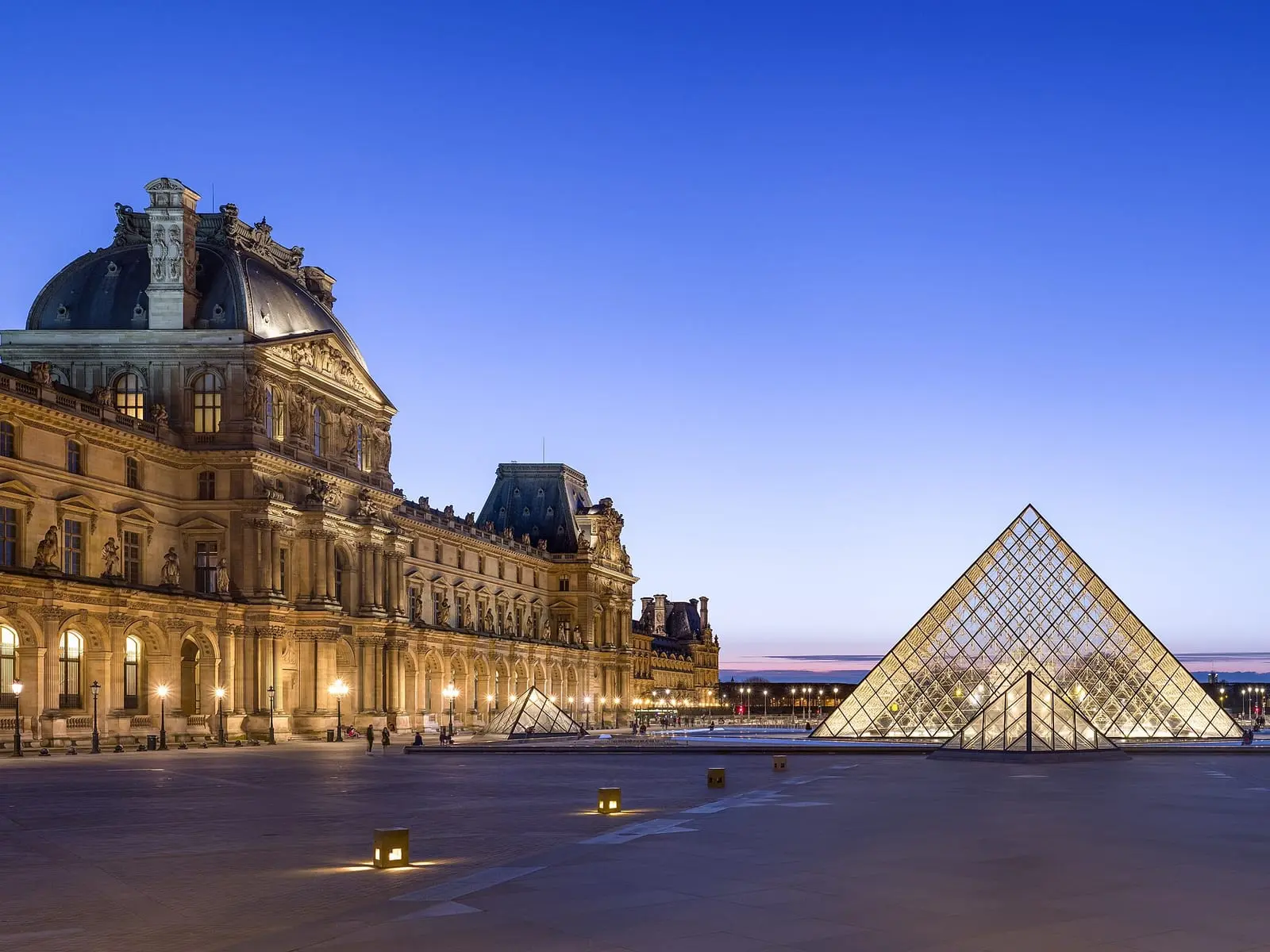
Versailles, Chambord, the Louvre and the other *domaines nationaux* operate their own regimes, generally paid, generally requiring an application well in advance. This is not a formality: a wedding party arriving at a national estate without authorisation will be asked to leave, and has been.
The Mont-Saint-Michel abbey, the Sainte-Chapelle and comparable sites likewise set their own conditions for professional photography inside.
Interiors
There is no national rule for interiors. A church follows the diocese; a château follows its owner; a hotel follows its management; a museum follows its own charter. The answer is in your hire contract or in the site's own conditions, and it is worth reading it rather than assuming:
- Several estates permit a ceremony but not photography in the state rooms.
- Many forbid flash anywhere indoors, which is about conservation rather than nuisance and is not negotiable.
- Some close their gardens at a fixed hour regardless of what you have paid for.
We contact the venue as soon as a wedding is booked, precisely so that the running order is built on what is actually allowed. See the wedding page for how that works.
Drones
Flying a drone commercially in France requires a declared operator, and near any built-up area a prefectoral authorisation obtained in advance. Historic monuments, national estates, much of the Riviera coastline and the approaches to every airport are permanently restricted.
A supplier who offers drone footage over a listed château without mentioning any of this is either authorised and has done the paperwork, or intends to fly illegally at your event. It is a fair question to ask, and the answer should be a document rather than a reassurance.
The two rights nobody separates
Worth restating because it causes more confusion than the permits do. The photographer's copyright in the image and your right to your own image are two different things that exist at the same time. Commissioning a photograph does not transfer its copyright, and owning the copyright does not entitle anyone to publish your face. Both are handled by documents rather than assumptions.
What this means in practice
For the overwhelming majority of sessions — a couple, a family, a portrait, a proposal, on public streets and quays at an hour when nobody else is about — nothing is required and nothing is paid. The cases that need arranging are the ones involving a park with a professional crew, an interior, a national estate, or a drone, and all four are known weeks in advance.
Frequently asked questions
- Do we need a permit for a photo session in Paris?
- Not on the public street, which is where most sessions happen. Municipal parks usually require a request for professional work, national estates such as Versailles run their own paid regimes, and interiors follow the building’s own rules. A tripod frequently changes a free situation into a permitted one, so it is worth saying in advance whether you want one.
- Can we photograph the Eiffel Tower?
- Yes. The tower itself is long out of copyright. Its night-time lighting installation is a protected work in its own right, which is why commercial use of illuminated night shots is restricted — daytime and blue-hour photographs are unaffected, and those are the ones worth taking anyway.
- Can we photograph inside a château?
- It depends entirely on the estate, and the answer is in your hire contract rather than in any national rule. Several allow the ceremony but not the state rooms, and many forbid flash indoors for conservation reasons. We confirm it with the venue before the day rather than discovering it on it.
- Is a drone allowed at our wedding?
- Only with a declared operator, and near any built-up area only with a prefectoral authorisation obtained in advance. Historic monuments, national estates and much of the Riviera coast are permanently restricted. Ask any supplier offering drone footage to show which authorisation covers your venue.