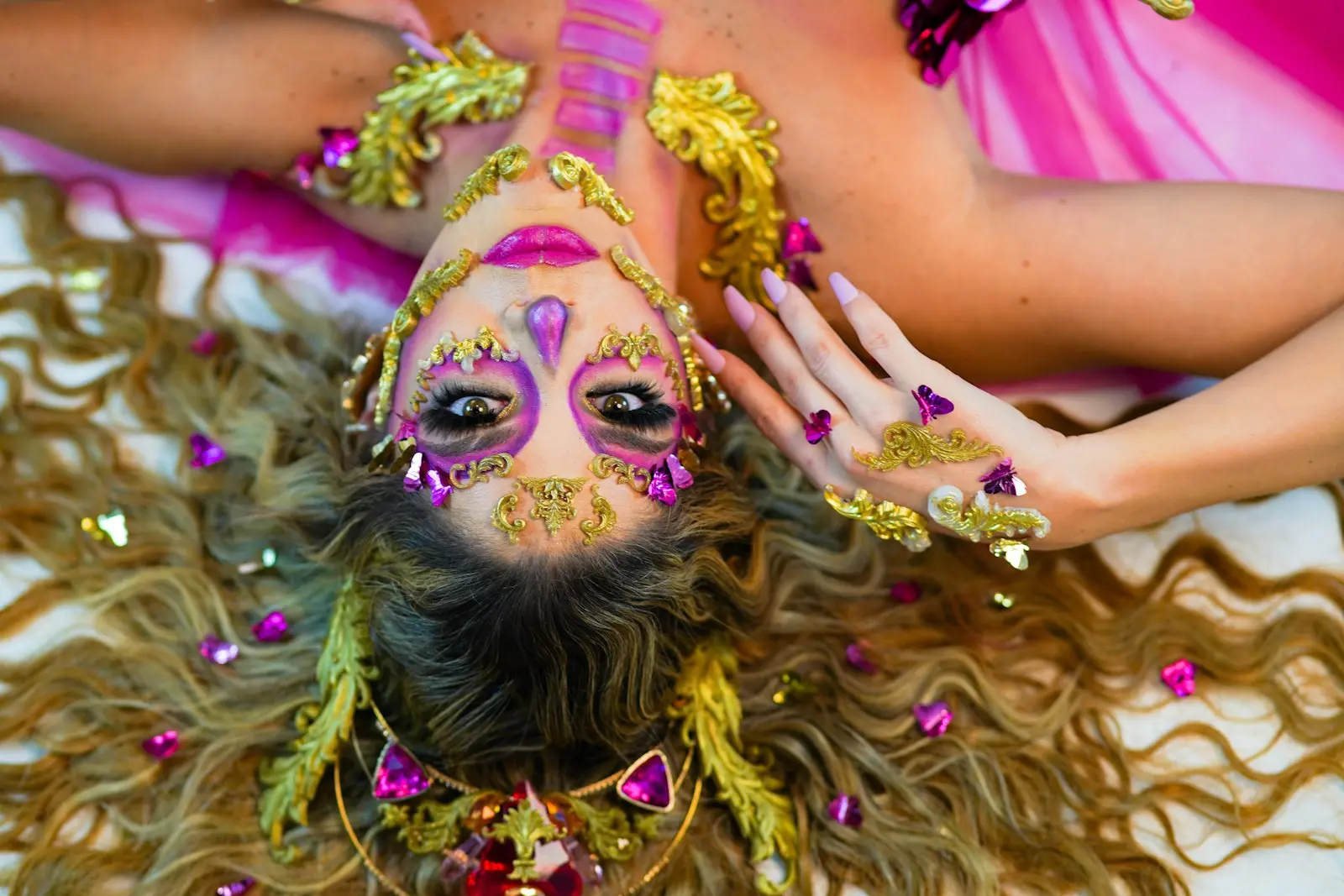
Why a fashion editorial in Annecy needs two chapters
Most locations give a crew one good window of light. This one gives two, at opposite ends of the morning. The historic centre wants an early call — the Pont des Amours is empty at eight and impassable for a team with rails and reflectors by eleven. The lake wants the reverse: its blue-green only appears when the sun is steep, so a beach-bag or swimwear story shot at golden hour comes back looking grey.
Over five hours, wardrobe, grooming and talent can rotate through outfit after outfit in both places, and the closing look gets the same care as the opening one.
On location, or under control
Location gives garments a world around them, at the cost of weather and passers-by. In Annecy that trade is usually worth it for collections that suit water, colour or mountain light: the public shore near Sévrier offers a long stretch to work along with peaks behind, and as a public shore it costs nothing to use. For tailoring, knitwear close-ups or a lookbook that needs perfect consistency, a studio set-up is the safer call.
Many shoots mix both: an early outdoor chapter, then controlled light for detail shots once the town is busy.
Calendar and light
For resort or swimwear, only the warm months make the water perform. Autumn-winter lines profit from October, when white can dust the ridges above warm-toned water. Winter shoots are often bathed in clear, cold light with white peaks and streets nearly empty, which means fewer interruptions and fewer onlookers in frame.
Five hours for €600, to publication standard
You are paying for five hours, inside or out, then forty images finished the way a glossy or a campaign demands: skin cleaned, textiles refined, colours matched across every outfit. That depth of retouching is why delivery takes up to ten days rather than two. Share a mood board or reference deck beforehand; an hour of alignment saves two on the day.
Base camp in Sévrier, Duingt or La Clusaz? No mileage — nor from Talloires, Menthon-Saint-Bernard or Veyrier-du-Lac.