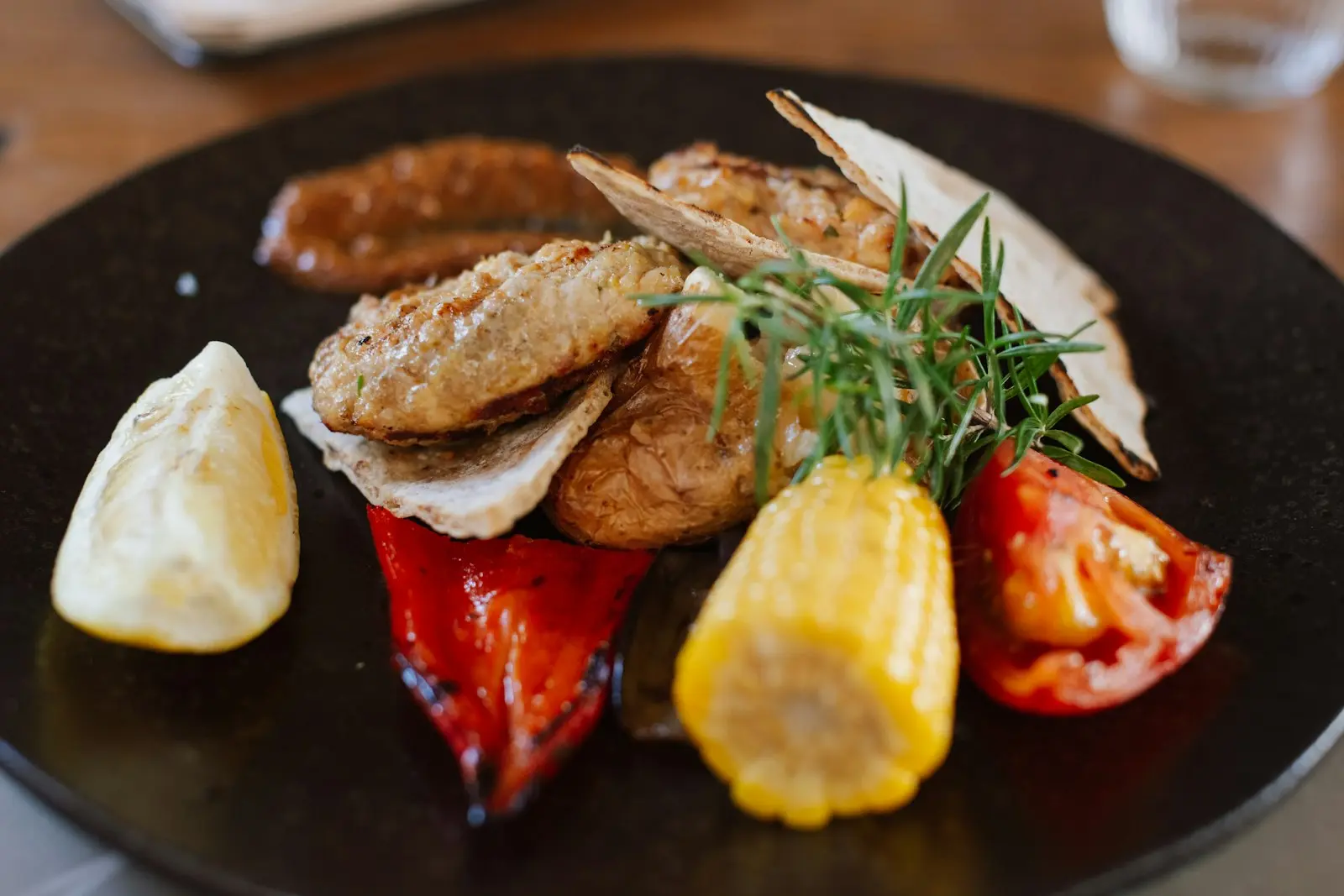
Food and restaurant photography in Saint-Tropez, fitted between seasons
Here the calendar makes most of the decisions for a restaurateur. At the height of summer nobody in the building has four spare hours; in the depths of winter much of the village has pulled its shutters down. The window that tends to work is the run-up to reopening, or a calm stretch in May, June or September when the pass can send plates out for a lens rather than a full room.
Whatever date we land on, we come while the doors are shut to the public. Every plate leaves the pass looking exactly as a diner would get it and is shot before it cools; the room and the crew are covered on the same trip, so there is no second call-out to pay for.
Plates, the room, the brigade
Food goes first, while the kitchen’s concentration is at its peak: the signature dishes, a handful of seasonal ones, and the close-up textures that menus and takeaway listings lean on. Next comes the dining room, laid as for service, so a future guest knows what kind of evening they are booking. Last, the people — chef at the pass, servers, hands mid-gesture — because diners like to see who is cooking for them.
If you also want your terrace or street in a frame, we will look at whether it is practical. The coloured houses of the harbour, for instance, are clear of crowds only until nine; after ten they are hidden behind visitors.
Reaching you in high summer
Should the shoot fall in July or August, plan around the approach road: it is the only route onto the peninsula and it locks up by late morning. We arrive ahead of that, and any supplier or staff member coming in for the day should too. Kitchens in Port-Grimaud, Grimaud, Gassin, Sainte-Maxime and Ramatuelle get the same terms as the village.
Four hours, forty images, €350
One four-hour visit during your closure, covering dishes, dining room and team. Forty retouched files, exported for your printed or online menu, your own website and each delivery platform, so no-one has to hack them into shape later.